- Creative Automation
- Posts
- Microsoft Puts DeepSeek on the Table
Microsoft Puts DeepSeek on the Table
PLUS: China's Rare Earth Curbs and WhatsApp's New Chief

Creative Automation
June 22, 2026
In partnership with

AI's price war is turning into a cloud strategy question.
This issue: Microsoft weighs a DeepSeek route, China tightens export pressure on U.S. industrial suppliers, WhatsApp gets a founder-operator, intelligence agencies warn about AI cyber risk, and Getty gets a market jolt from OpenAI.
👀 Microsoft puts DeepSeek on the table
🇨🇳 China turns rare earths into leverage
📱 WhatsApp gets a founder-operator
🚨 Five Eyes raises the AI cyber alarm
📈 Getty gets an OpenAI bump
🔍 + 5 sharp tools for builders and operators
P.S. Move this email to your primary inbox to make sure you do not miss the useful bits.
First time reading? Sign up here.
Want to learn more?
Sponsor
AI help, without the trust tax.
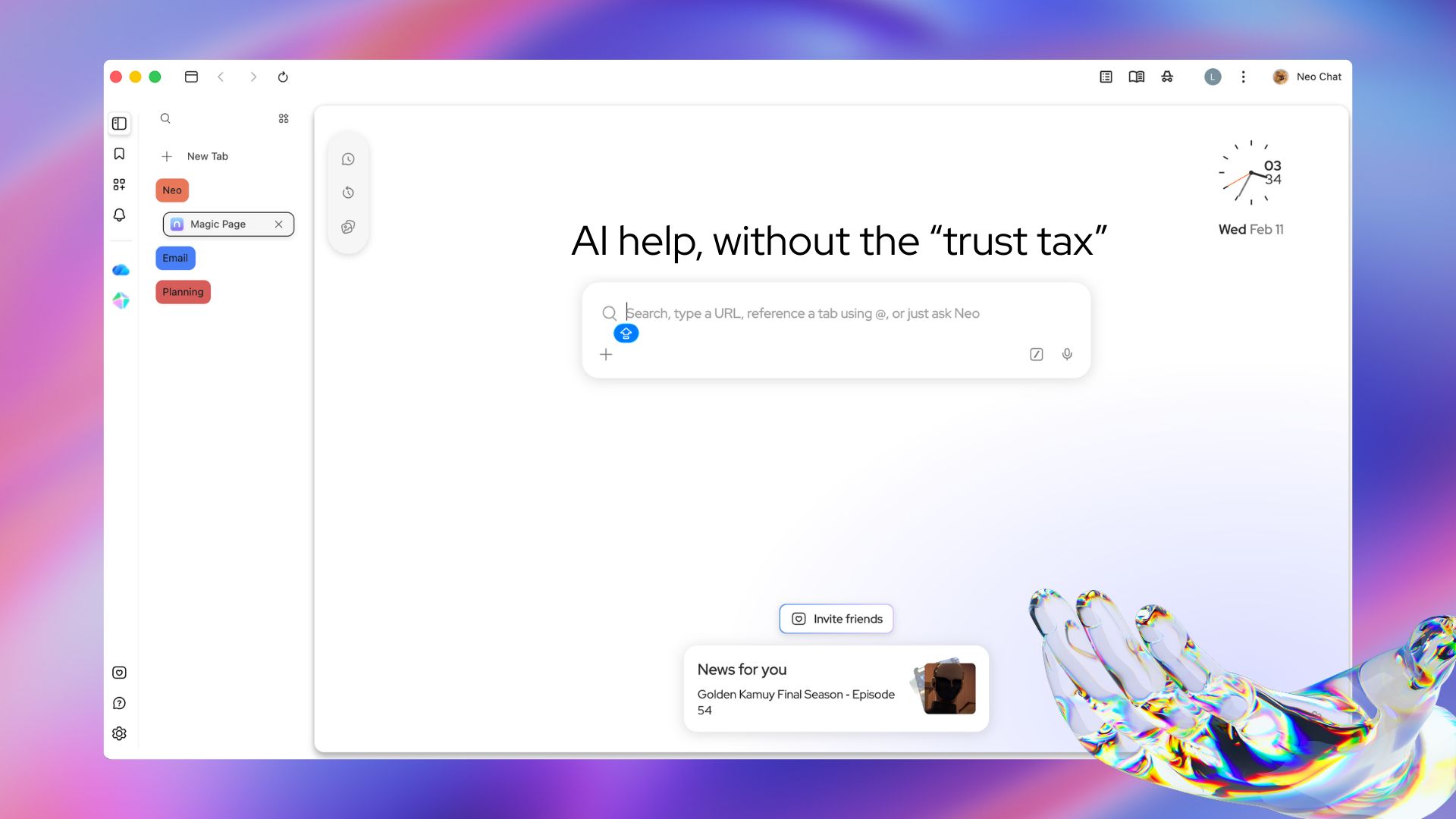
Most AI tools ask you to trade your data for intelligence. Norton Neo doesn't. It's the first safe AI-native browser built by Norton, and it gives you powerful built-in AI without handing your privacy over to get it. Search, summarize, and write with AI built directly into your browser. Your data stays yours. Your context stays private.
Built-in VPN, anti-fingerprinting, and ad blocking come standard. No add-ons. No setup. No compromises.
Fast. Safe. Intelligent. That's Neo.
Cloud
Microsoft Puts DeepSeek on the Table
Satya Nadella said Microsoft is weighing whether to host a version of DeepSeek, the low-cost Chinese model that has pushed the entire AI market into a harder pricing conversation.
The interesting part is not just the model. It is the distribution. If Azure becomes a route into DeepSeek, Microsoft can serve customers that care more about cost and choice than lab loyalty.
That also raises pressure on OpenAI and Anthropic. The cloud platforms do not want value captured by a few expensive proprietary models forever. They want model competition that keeps workloads flowing through their infrastructure.
Export Controls
China Turns Rare Earths Into Leverage
China added 10 U.S. industrial suppliers to its export control list and barred 46 American firms from government procurement, with rare earth and defense-linked companies among the targets.
The move looks partly symbolic because many listed firms have limited China exposure. But symbolic controls still matter when rare earths sit inside drones, magnets, defense hardware, and the next wave of robotics infrastructure.
For operators, the signal is simple: supply-chain risk is not a procurement footnote anymore. It is becoming part of the product roadmap for any company building with strategic materials or dual-use components.
Business
WhatsApp Gets a Founder-Operator
Meta is investing $900 million in Indian fintech company Cred and tapping founder Kunal Shah to lead WhatsApp after Will Cathcart's long run.
This is a product and market bet at the same time. WhatsApp already has enormous reach, especially in India, but the next growth layer is payments, business messaging, subscriptions, ads, and AI agents inside chats.
Putting a fintech founder in charge makes the direction clearer: WhatsApp is being treated less like a utility app and more like commercial infrastructure.
Security
Five Eyes Raises the AI Cyber Alarm
The Five Eyes intelligence alliance warned that frontier AI could soon make cyber threats faster, cheaper, and more destabilizing for governments and businesses.
The useful takeaway is not panic. It is that cyber risk is moving from a technical team problem to an executive operating risk. AI lowers the skill floor for attackers and accelerates testing, phishing, vulnerability discovery, and campaign iteration.
That means defensive automation needs to improve too. Teams will need better monitoring, faster patch workflows, stronger identity checks, and clearer escalation rules before the attack tempo changes.
Sponsor
The Ultimate Guide for Usage-Based Pricing for SaaS and AI

Implementing usage-based pricing successfully requires more than just a pricing strategy.
Download this guide for practical advice and best practices when considering usage-based pricing.
Markets
Getty Gets an OpenAI Bump
Getty Images surged after announcing a multi-year OpenAI deal that can put licensed Getty photos inside ChatGPT search and discovery experiences.
The market reaction is a reminder that rights still have leverage. Synthetic media gets the headlines, but trusted licensed images are useful when users ask for factual, current, or high-confidence visual results.
The open question is how far the economics go. Display partnerships are not the same as training deals, and the revenue split still matters. But Getty showed that premium content can still create bargaining power in AI distribution.
Academy
Build Faster With Creative Automation Academy
Get practical AI workflows, tutorials, and automation playbooks for turning tools into useful systems.
Trending
AI Tools of the Week
📞 Aircall
AI voice agents that call, qualify, and follow up with leads around the clock. Useful when speed-to-lead keeps dying in the handoff.
🌉 Skybridge
A React framework for building MCP-compatible tools with server logic, UI rendering, and assistant integration handled together.
🧾 AgentX
A multi-agent platform for document workflows, with collaborative agents and performance evaluation built into the process.
🎨 Alai 2.0
AI-assisted slide design that handles layout, typography, and color decisions so the content process moves faster.
✅ readywhen
Captures decisions and commitments from Slack, email, and meetings, then drafts the next action for approval.
Thanks for stopping by!
Have some feedback or want to sponsor this newsletter?
BTW - I keep my inbox organized in Meco, game changer for inbox sanity.
Not a subscriber? Sign up for free below.